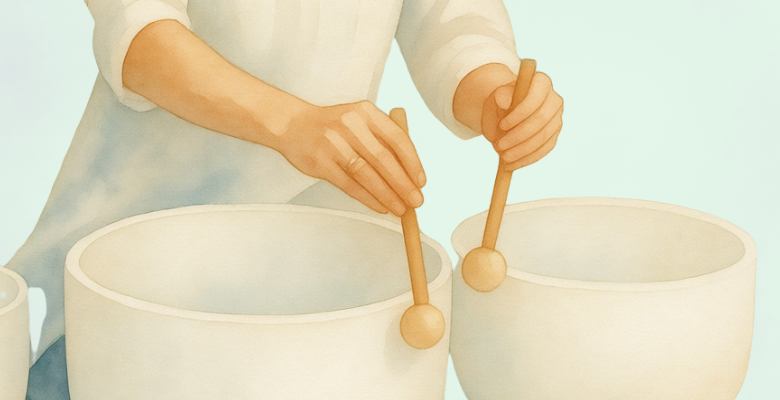
I've been wanting to write this series for a while. We talk a lot about hormones, treatments, and what the evidence says about each symptom — and rightly so, it's essential. But there's another dimension of care in this stage that sometimes gets pushed to the background: the body, the breath, sound, movement. Not as a substitute for medicine, but as a real complement, with its own value.
Why holistic wellbeing matters so much at this stage
Menopause isn't just a hormonal event — it's a transition that runs through the entire body: the nervous system, sleep quality, the way we breathe, our relationship with our own body. When we only address the isolated symptom — the hot flush, the insomnia, the anxiety — without addressing the whole system that sustains them, the improvement is often only partial.
A complement, not a substitute
Holistic self-care doesn't replace medical treatment when it's needed, but it builds the foundation on which any treatment works better.
I want to introduce you to Catalina Gómez
Catalina was born in San José, Costa Rica, and has been a contemporary dancer since childhood. She holds a Bachelor's degree in Dance from the Universidad Nacional de Costa Rica and postgraduate studies in contemporary dance from the Folkwang Universität der Künste, in Germany. In 2014 she trained as a sound therapist at the German Peter Hess Institut, specialising in Tibetan singing bowl massage, and she also trained in dance therapy (Tanztherapie), yoga and breathwork.
For several years, between 2015 and 2022, she worked in palliative care and holistic support for older adults at the Diakonie in Düsseldorf, integrating sound therapy, active listening and physical and emotional wellbeing in a setting where human companionship is everything. Today, back in Costa Rica, she offers sessions in sound therapy, yoga, breathwork and essential-oil therapy, always from a holistic-wellbeing approach.
I asked her permission to share her story because I think she embodies exactly what I want to explore in this series: practices with ancient roots that are also, today, being studied with serious scientific methodology. We're going to go through them one by one — what the evidence says about conscious breathing, yoga, singing-bowl sound therapy and aromatherapy — with honesty about what we know and what's still being studied.
📌 What's coming in this series
- Post 2: Conscious breathing — why a few minutes a day can change how you experience a hot flush or a moment of anxiety.
- Post 3: Yoga in menopause — what actually improves, according to the most recent meta-analyses.
- Post 4: Sound therapy and Tibetan singing-bowl massage — what the science is showing about sound and the nervous system.
- Post 5: Aromatherapy and essential oils — which ones have real evidence behind them, and how to use them wisely.
An invitation, not another obligation
I'm not handing you one more list of self-care tasks you "should" be doing. I'm inviting you to explore, with curiosity, which of these practices resonates with you — not all of them fit every person the same way, and that's fine. The goal isn't to do it all; it's to find your own point of support.
This content is for informational purposes only and does not constitute medical advice. If symptoms are affecting your quality of life, please consult your doctor or gynaecologist.