Why does it happen?
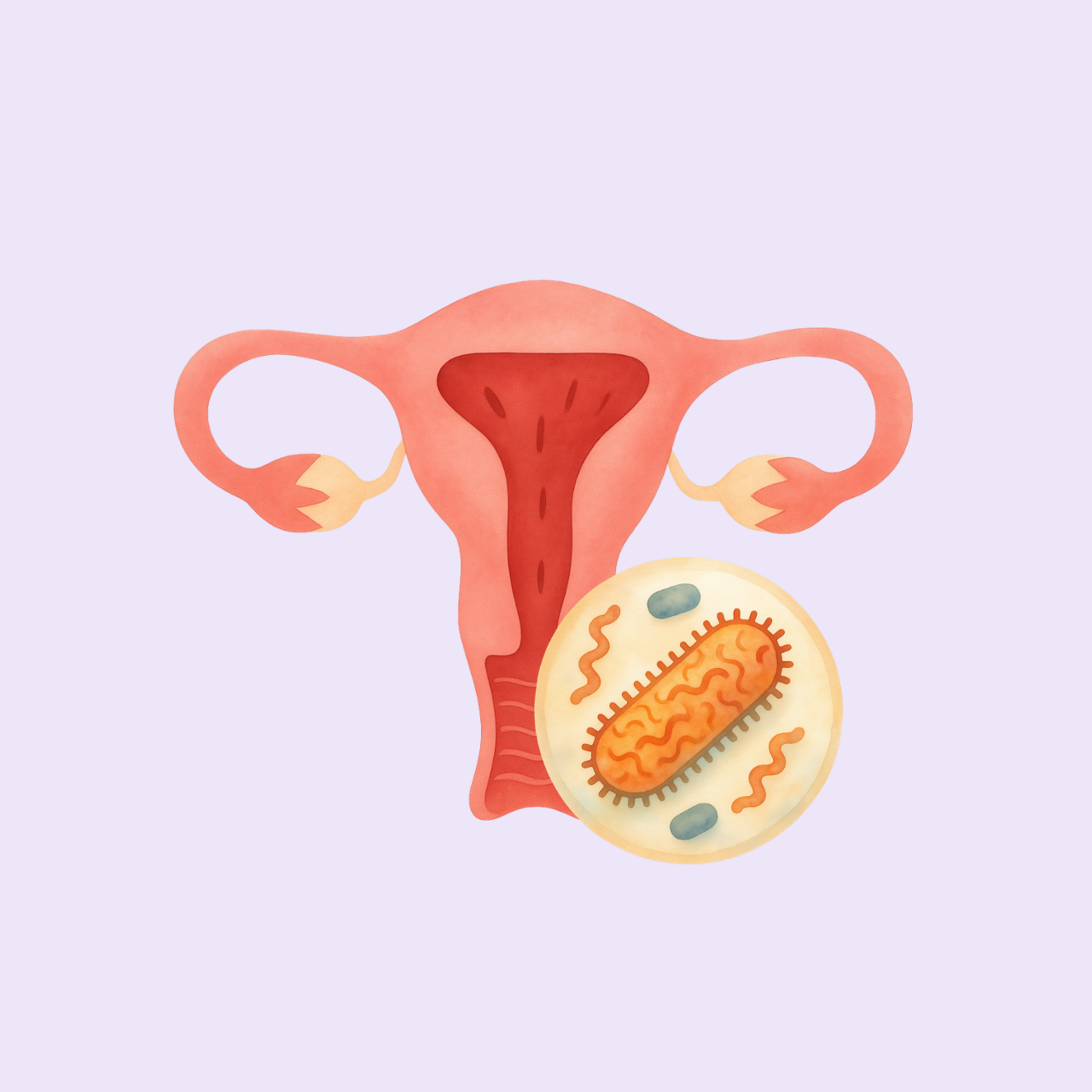
Lactobacilli live on vaginal glycogen, which depends on oestrogen. As oestrogen drops, glycogen decreases, Lactobacilli reduce and pH becomes alkaline — the perfect environment for anaerobic bacteria like Gardnerella vaginalis to proliferate.
Characteristic symptoms
- Grey or whitish discharge with a fishy odour
- Mild vaginal itching or burning
- Discomfort when urinating
- In many cases, completely asymptomatic
Key fact
Probiotics with L. rhamnosus GR-1 and L. reuteri RC-14 strains reduce recurrence of bacterial vaginosis by 60% when combined with standard treatment.
Prevention and care
- Oral and vaginal probiotics with specific Lactobacillus strains
- Prebiotic diet: garlic, onion, asparagus, banana
- Breathable underwear and natural fabrics
- Avoid unnecessary antibiotics that destroy the microbiota
The information on this page is for general information only and does not replace advice from a healthcare professional. If a symptom worries you or affects your daily life, talk to your doctor or gynaecologist.