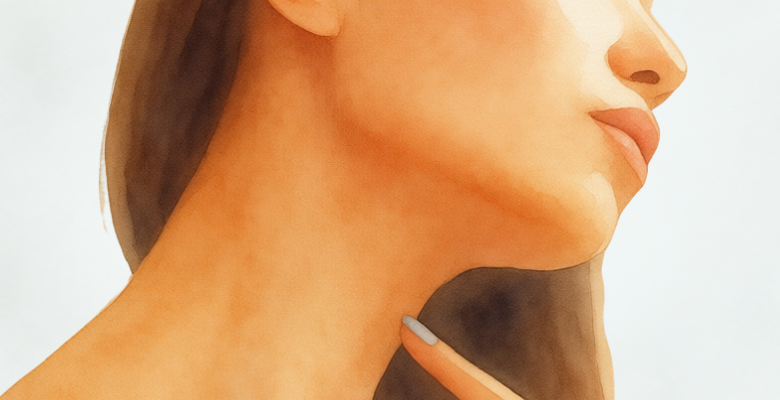
Clicking when you open your mouth, pain when chewing, that "locked jaw" feeling in the mornings, or headaches that start at the temple and travel down toward the ear. Many women live with these symptoms for years without knowing they have a name: temporomandibular disorders (TMD, also called TMJ disorders), and that their appearance is closely tied to the hormonal changes of perimenopause.
Why it's such a female problem
TMD clearly affects women disproportionately compared with men — in some regions, up to 1.5 times more often. An updated 2024 systematic review confirmed that oestrogen levels are directly involved in modulating pain in the temporomandibular joint and the entire orofacial region: it's no coincidence that these disorders peak during the reproductive years and intensify again during the menopause transition.
What the evidence says
- Globally, TMD affects approximately 34% of the population, with projections estimating a sustained increase over coming decades — up to nearly 44% by 2050.
- Oestrogens are directly involved in modulating joint and muscle pain in the orofacial area — their fluctuations, more than their absolute level, appear to influence the onset or worsening of symptoms.
- Studies in postmenopausal women show a meaningful prevalence of pain-related TMD, with differences depending on hormone therapy use.
Why it's mistaken for other things
TMJ pain easily disguises itself as migraine, neck pain or even ear problems, which delays proper diagnosis. If your headaches worsen upon waking, or you notice yourself clenching or grinding your teeth (bruxism) without realising it during sleep, it's worth getting a specific assessment of the temporomandibular joint, not just the head or neck.
What can help
- Assessment by a practitioner experienced in TMD (often an orthodontist or a dentist specialised in occlusion).
- Night guards if bruxism is present.
- Orofacial physiotherapy and relaxation exercises for the chewing muscles.
- Stress management: jaw tension tends to intensify during periods of higher emotional load, which is very present in perimenopause.
A note
This content is for informational purposes, written from a dental perspective, and does not replace an individual clinical assessment.
- Zieliński G, Pająk-Zielińska B (2024). Association between Estrogen Levels and Temporomandibular Disorders: An Updated Systematic Review. International Journal of Molecular Sciences, 25(18), 9867.
- Leucuța DC, Anton D, Almășan O (2024). Estrogen Hormones' Implications on the Physiopathology of Temporomandibular Dysfunction. Journal of Clinical Medicine, 13(15), 4406.
- Zieliński G (2025). Quo Vadis Temporomandibular Disorders? By 2050, the Global Prevalence of TMD May Approach 44%. Journal of Clinical Medicine, 14(13), 4414.