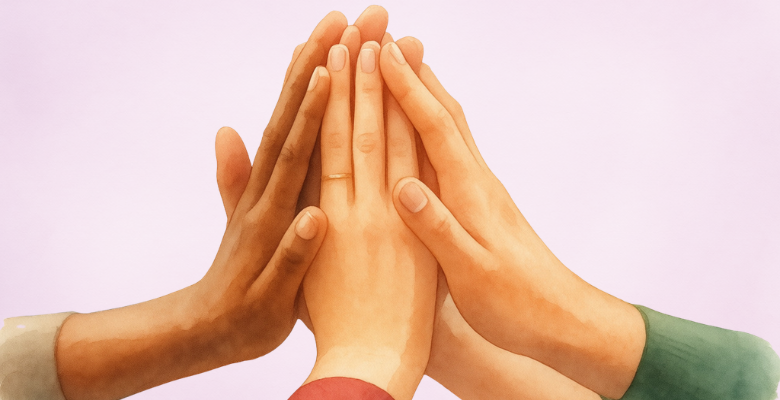
There's a phrase that repeats itself, almost word for word, in doctors' offices, in groups of friends, and across social media around the world: "nobody told me about this." What's striking is that it doesn't matter which language it's said in —nobody told me, in German, in Spanish— the feeling is identical: reaching 40, or 45, starting to notice changes in your sleep, mood, skin or weight, and discovering that nobody prepared you for it.
An information gap with deep roots
This isn't a coincidence, nor is it anyone's individual oversight. For decades, medical research into menopause received a fraction of the funding directed at other areas of health, and much of the clinical knowledge available in doctors' offices fell behind the most recent advances.
The result is a real gap: many women reach perimenopause — which, according to the most recent clinical guidelines, can begin two to four years before the final period — without even knowing that's the name for what they're experiencing.
It's not a problem unique to one country
What's interesting is that this information gap has produced, in parallel and across different languages, the same kind of response: women who, after living through that disorientation themselves, turned their own search for answers into a platform for others.
In Germany, for example, a nutritionist built an entire community — with programmes, a newsletter and a book co-written with her gynaecologist — after feeling lost in her own hormonal transition, despite having professional training in nutrition. In Spain, several nutritionists and gynaecologists have followed similar paths: some after a diagnosis that accelerated their own menopause, others simply tired of the lack of clear information in traditional medical consultations.
The pattern repeats itself again and again: an unmet need, sooner or later, produces someone willing to meet it.
A global phenomenon, not an anecdote
A recent digital study, conducted with Mayo Clinic across 158 countries, confirms that confusion about when perimenopause actually begins and what to expect from it is a constant across languages and cultures — not an isolated impression.
What these stories have in common
Beyond language or country, almost all of them share three ideas: that information should be accessible and free of unnecessary jargon, that diet and lifestyle are real (though not magic) levers for getting through this stage, and that no woman should feel she has to figure it out alone.
That last idea, in particular, is the heart of why communities like this one — including ours — make sense: they don't replace a doctor, but they do fill the space of support and information that a 15-minute appointment often can't cover.
Our invitation
If you feel like "nobody told you" about what you're going through right now, you're not alone, and it's not too late to get properly informed. Perimenopause isn't a condition to fear in silence: it's a stage best navigated with reliable information, support, and without the pressure of having to work it all out on your own.
This content is for informational purposes only and does not constitute medical advice. If symptoms are affecting your quality of life, please consult your doctor or gynaecologist.
- Hedges MS, Hewings-Martin Y, Karam J, et al. (2026). Global perspectives on perimenopause: a digital survey of knowledge and symptoms using the Flo application. Menopause, 33(7), 789-798.
- Lumsden MA, Dekkers OM, Faubion SS, et al. (2025). European Society of Endocrinology clinical practice guideline for evaluation and management of menopause and the perimenopause. European Journal of Endocrinology, 193(4), G49-G81.
- Nature (2025). Menopause research is globally underfunded. It's time to change that.